WELLNESS EDUCATION
Hydration
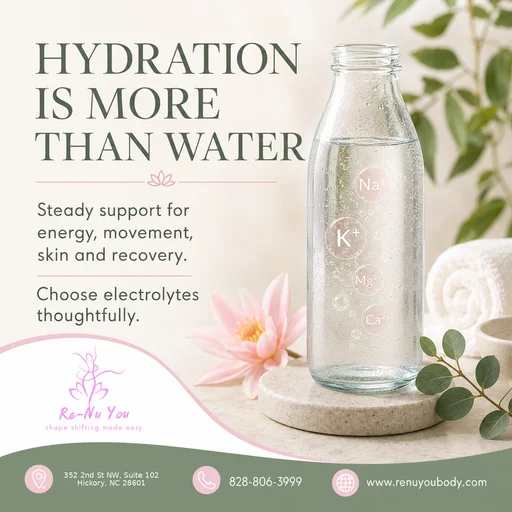
Hydration: More Than Drinking Water
Most people know they should drink more water.
But knowing something and doing it consistently are two different things.
Water sounds simple, but hydration affects almost every system in the body. It supports energy, digestion, circulation, lymphatic flow, muscles, joints, skin, recovery, body temperature, and the way we feel throughout the day.
At Re-Nu You, we talk about hydration often because so many wellness goals depend on it.
Hydration is not just about drinking one big bottle of water after you already feel bad.
It is about giving your body steady support throughout the day.
Why Hydration Matters
Your body is made mostly of water, and every cell depends on fluid balance to function well.
Water helps support normal circulation, nutrient transport, waste removal, digestion, bowel regularity, muscle function, joint comfort, skin hydration, body temperature regulation, energy, recovery, and lymphatic flow.
When hydration is low, the body has to work harder.
You may feel tired, sluggish, foggy, headachy, stiff, or more run down than usual. Some people even mistake thirst or dehydration for hunger, cravings, or low motivation.
Hydration will not fix every problem, but it is one of the simplest foundations to check first.
Hydration Supports Energy
When clients feel tired, many immediately reach for caffeine.
Coffee is not the enemy.
But caffeine should not be the only hydration strategy.
Low fluid intake can contribute to fatigue, headaches, dizziness, brain fog, constipation, and feeling generally sluggish. If someone is drinking mostly coffee, soda, sweet drinks, or very little fluid during the day, the body may not be getting the steady hydration it needs.
A simple place to begin is drinking water earlier in the day instead of waiting until evening and trying to catch up all at once.
Your body usually responds better to consistency than extremes.
Hydration and the Lymphatic System
Your lymphatic system is one of the body’s natural cleanup and fluid-balancing systems.
It helps move lymph fluid, supports immune function, and assists with normal waste transport from tissues.
Unlike the heart, the lymphatic system does not have one strong central pump. It relies heavily on movement, muscle contraction, breathing, hydration, and healthy circulation to keep things moving.
That is one reason we encourage hydration around Body Lymphatic Enhancement, movement, vibration, dry brushing, and recovery-focused services.
Water does not magically “detox” the body in a dramatic way, and no spa service replaces your kidneys, liver, lungs, digestive system, or medical care.
But hydration does support the body’s normal fluid movement and waste-removal processes.
Hydration and Muscles
Muscles need fluid to contract, relax, and recover.
When hydration is low, some people notice muscle tightness, cramping, poor exercise tolerance, more soreness, less energy, reduced performance, or slower recovery.
Hydration also works with minerals such as sodium, potassium, magnesium, and calcium to support normal muscle and nerve function.
This matters for everyone, not just athletes.
It matters for clients doing movement therapy, EMS, pelvic floor strengthening, body contouring, red light therapy, lymphatic work, or simply trying to feel better in daily life.
Hydration and Skin
Skin health is not only about what you put on the outside.
The skin also reflects internal support.
Hydration may influence dryness, dullness, skin comfort, elasticity, recovery, and the way skin feels after treatments.
Drinking water will not erase wrinkles, replace sunscreen, or substitute for professional skin care.
But dehydration can make skin look and feel more tired.
Healthy skin support includes both inside and outside care: hydration, protein, nutrition, sleep, stress recovery, professional esthetics, Truth skincare, red light, and appropriate home care.
Why We Talk About Hydration Around Spa Services
At Re-Nu You, hydration comes up during many services because these treatments are designed to support the body’s natural recovery, circulation, lymphatic, muscle, and tissue processes.
Hydration is especially important around services such as Body Lymphatic Enhancement, red light therapy, body contouring, cold laser therapy, shockwave therapy, EMS, movement therapy, vibration plate or vibration mat, pressotherapy, G5 massage, dry brushing, pelvic floor strengthening, and recovery-focused sessions.
Hydration does not guarantee a specific result from a treatment.
But being poorly hydrated may make it harder for the body to feel comfortable, recover well, and respond the way we want it to.
That is why we encourage clients to drink water before and after many services.
It is not a complicated recommendation.
It is foundational.
Drinking More Water Does Not Mean Chugging It All at Once
One mistake people make is trying to “catch up” by drinking a large amount of water all at once.
That usually does not feel good.
It may leave you bloated, uncomfortable, or running to the bathroom.
A better approach is steady hydration throughout the day.
Andrea’s practical tip is simple:
Do not wait until you are thirsty to drink water. Keep a reusable bottle nearby and take small sips throughout the day. Consistency is much easier on your body than trying to drink several bottles all at once.
This is not fancy.
It just works better for real life.
What About Electrolytes?
Electrolytes are minerals that help support fluid balance, muscle contraction, nerve signaling, and normal body function.
Common electrolytes include sodium, potassium, magnesium, calcium, and chloride.
Electrolytes matter because hydration is not only about plain water. The body also needs minerals to help manage fluid balance and normal function.
However, not every electrolyte product is the same.
Many store-bought electrolyte drinks and packets are loaded with sugar, high in sodium, or both. That may be appropriate in certain situations, but it may not be the best fit for everyday hydration.
Everyday Electrolytes vs. Heavy-Sweat Electrolytes
The right electrolyte depends on the situation. Heavy sweating, outdoor work, intense sports, heat exposure, or significant fluid loss may require more sodium than an ordinary day. Medical conditions and medications can also change what is appropriate.
For everyday use, Andrea looks for low or no added sugar, helpful minerals, good taste, and a formula people will use consistently. One product she enjoys is doTERRA® MetaPWR Recharge. According to doTERRA’s product information, one sachet provides magnesium, calcium, sodium, potassium, and other minerals, with 100 mg sodium and 300 mg potassium—a 1:3 sodium-to-potassium ratio.
That does not make it the right choice for everyone or every situation. Read the label, consider the amount you sweat, and follow medical guidance when needed. Ask any spa team member for general product information or help finding the right person for a detailed question.
When Plain Water May Not Feel Like Enough
Some people struggle to drink plain water consistently.
Others drink water but still feel like they need more support because of sweating, activity, heat, certain eating patterns, or busy schedules.
An everyday electrolyte can be helpful when it makes hydration easier to maintain.
It may be especially useful for people who forget to drink water, dislike plain water, sweat during the day, are increasing movement, feel better with minerals added, need help building a hydration habit, or want a daily option without extra sugar.
Again, this does not mean everyone needs electrolytes every day.
It means electrolytes can be a useful tool when chosen thoughtfully.
Be Careful With Medical Conditions
Hydration advice should always be individualized when medical conditions are involved.
People with kidney disease, heart failure, fluid restrictions, blood-pressure concerns, certain medications, electrolyte disorders, or pregnancy-related concerns should follow the guidance of their healthcare provider.
More water is not always better for every person.
More sodium is not always better either.
If you have been told to limit fluids, sodium, potassium, or magnesium, do not start a new electrolyte product without checking with your provider.
Wellness habits should support your health plan, not work against it.
Simple Ways to Hydrate Better
Hydration does not have to be complicated.
Start with one simple change.
Keep Water Visible
If your water bottle is hidden in your bag, car, or refrigerator, you may forget it exists.
Keep it where you can see it.
Drink Earlier in the Day
Many people realize at 5 p.m. that they have barely had any water.
Start earlier.
A few sips in the morning can set the tone.
Pair Water With Existing Habits
Drink water when you wake up, with meals, after coffee, before a treatment, after a treatment, after using the bathroom, when you get in the car, or when you sit down at your desk.
Habit pairing makes hydration easier to remember.
Add Flavor if Needed
Some people drink more water when it tastes better.
You may add lemon, berries, cucumber, mint, or an electrolyte option that fits your needs.
The best hydration plan is one you will actually follow.
Use Electrolytes Thoughtfully
Choose an electrolyte based on the situation.
Everyday hydration is different from heavy sweating, outdoor work, intense sports, or dehydration.
For everyday use, Andrea prefers low or no added sugar and a balanced mineral profile. One option she enjoys is doTERRA® MetaPWR Recharge, which uses a 1:3 sodium-to-potassium ratio.
Notice Your Patterns
Pay attention to how you feel when you hydrate consistently.
Do you have fewer headaches, more steady energy, better bowel habits, less sluggishness, better recovery, or improved skin comfort?
Your body often gives feedback.
Hydration Is a Foundation, Not a Quick Fix
Hydration will not replace sleep, protein, movement, medical care, or a balanced wellness routine.
It will not cure chronic pain, eliminate inflammation, reverse aging, or guarantee treatment results.
But it is one of the foundations that supports almost everything else.
If you are investing in wellness services but barely drinking water, skipping meals, sleeping poorly, and running on caffeine, your body may not have the support it needs.
Start with the basics.
Water. Minerals when needed. Protein. Movement. Sleep. Recovery.
Those basics matter more than most people realize.
How Re-Nu You Supports Hydration Habits
At Re-Nu You, we want clients to understand why hydration matters, not just hear “drink more water” over and over.
We may talk about hydration during lymphatic support, body contouring, red light therapy, movement therapy, pain and recovery services, skin and esthetic services, pelvic floor strengthening, healthy aging conversations, wellness education, and Manifesting Me habit support.
We also help clients think realistically.
Not everyone is going to drink a gallon of plain water every day. Not everyone likes the same products. Not everyone needs the same minerals.
The goal is to build hydration habits that fit your body, your schedule, and your life.
The Bottom Line
Hydration is more than drinking water.
It supports energy, digestion, circulation, lymphatic flow, muscles, joints, fascia, skin, recovery, and overall wellness.
Plain water matters.
Electrolytes can matter too, especially when chosen for the right situation.
For everyday hydration, Andrea prefers low or no added sugar, useful minerals, and a product that fits real life. She enjoys doTERRA® MetaPWR Recharge for its taste and balanced electrolyte profile.
For heavy sweating, outdoor work, sports, heat exposure, or dehydration, extra sodium may be appropriate.
The key is not to treat every electrolyte product the same.
Read the label. Know your body. Choose the right tool for the right situation. Hydrate consistently.
Your body does not need perfection.
It needs steady support.
Provider Attribution
Written from the wellness-education perspective of Andrea Wagner, RN, MSN, RNC-MNN, owner of Re-Nu You Wellness Spa. Re-Nu You provides nonmedical wellness education and services.
Wellness and Medical Disclaimer
This article is for general education and is not medical advice, diagnosis, treatment, or an individualized hydration plan. Fluid and electrolyte needs vary. People with kidney disease, heart failure, fluid restrictions, blood-pressure concerns, electrolyte disorders, pregnancy-related concerns, or relevant medications should follow the guidance of an appropriate licensed healthcare professional. Supplements and wellness services are not substitutes for medical care. Individual experiences and results vary.